
In short. Is your South Delhi business owed somewhere between Rs 3 lakh and Rs 2 crore (check the current limit)? Then a commercial court lawyer near Saket Court will usually file before the District Judge (Commercial Court) for either the South or the South East district. Both sit in the Saket Courts Complex near Pushp Vihar. Which one you get turns on where the defendant works, or where the deal happened. Mediation comes first and can take up to three months. A fought suit commonly lasts one to three years. Begin by fixing the claim value and pinning down where the contract was made or performed.
Is this your situation?
- A showroom in Lajpat Nagar, a buyer in Okhla, a client in Greater Kailash or Hauz Khas or Saket. One of them owes you Rs 3 lakh or more and keeps pushing the date.
- You delivered goods or did the work for a company sitting in Jasola, Saket District Centre or Sarita Vihar. The money never came.
- The franchise, distribution or lease deal for a South Delhi shop or restaurant has fallen apart, and the other side has stopped taking your calls.
- A CS (COMM) summons from the Saket Courts Complex landed on your desk this week.
- Nobody can tell you for sure whether it's the South district, the South East district or the Delhi High Court.
- Before you sue, you want a straight answer on what it'll cost, how long it'll take and how often you'll have to go to Saket.
Which court at Saket actually hears commercial suits?
You'll find the Saket Courts Complex on Press Enclave Marg, a short way from Pushp Vihar and the District Centre. Two Delhi judicial districts have their courts there, South and South East. Each one has a District Judge (Commercial Court) of its own, designated under Section 3 of the Commercial Courts Act, 2015. People say 'the Saket commercial court' as if it's one court. It isn't. It's two sets of courts under one roof, and you've got to file in the right one.
They hear commercial disputes with a specified value from Rs 3 lakh up to Rs 2 crore. Suits get numbered CS (COMM) and show up on the cause list by court number and district, something like District Judge (Commercial Court)-02, South East. Go above Rs 2 crore and you're in the Commercial Division of the Delhi High Court instead. That ceiling could change. In July 2026 the Delhi High Court's Full Court recommended raising the district limit to Rs 10 crore, which needs an amendment to the Delhi High Court Act. Check what the current limit is before you file.
Appeals from either district go to the Commercial Appellate Division of the Delhi High Court within 60 days, under Section 13 of the Act.
South or South East: which district is yours?
On the South side, roughly, you've got Mehrauli, Chhatarpur, Saket, Hauz Khas, Malviya Nagar, Neb Sarai, Safdarjung Enclave and Sangam Vihar. South East takes in Lajpat Nagar, Defence Colony, Okhla, Kalkaji and Nehru Place, Greater Kailash, Jasola, New Friends Colony, Sarita Vihar, Badarpur and Jamia Nagar, among others.
Don't lean on that list too hard. Civil jurisdiction goes by the revenue map, and a boundary can run right down the middle of what everyone calls one colony. An office at the edge of Greater Kailash, or close to Chirag Delhi, might be on either side. File a Saket court commercial suit in the wrong district and you won't lose the case for it. You'll lose time, though, to an objection, a return of the plaint or a transfer, and that time doesn't come back. Confirm it. Use the jurisdiction list, or ask the filing section, before the plaint is signed off, because any commercial court lawyer near Saket Court should have this answered well before the first draft goes to the client.
Sometimes a dispute touches two Delhi districts, say an Okhla supplier selling to a buyer in Rohini. Our list of every Delhi district court complex and the areas it covers will help you see your options. The procedure common to all of them is on our page about Delhi district commercial courts.
Where South Delhi businesses usually land at Saket
| Business area (rough guide) | District at Saket | What the fights are usually about |
|---|---|---|
| Okhla Industrial Area, Phases I to III | South East | Garment and fabric supply, printing and packaging, job work, export orders |
| Nehru Place and Kalkaji | South East | IT hardware and software sold on credit, AMC contracts, unpaid distributor dues |
| Lajpat Nagar, Greater Kailash, Defence Colony | South East | Showroom and retail leases, franchise fallouts, interior and fit-out bills |
| Jasola, Sarita Vihar, Mathura Road | South East | Corporate service contracts, supplies to hospitals, facility management |
| Saket District Centre and Malviya Nagar | South | Office leases, IT and marketing services, mall tenancy rows |
| Hauz Khas, Mehrauli, Chhatarpur | South | Restaurant and hospitality franchises, event and banquet contracts, supplies to cafes |
Getting to the Saket Courts Complex
Most people take the Yellow Line to Malviya Nagar or Saket and grab an auto from there for the short ride to Press Enclave Marg, which is the easiest way in if you aren't driving. Coming from Gurugram? The Yellow Line runs straight through from Millennium City Centre. From Noida or East Delhi, people usually drive in through Kalindi Kunj or along the Outer Ring Road, or switch to the Yellow Line in central Delhi.
If you're driving, the roads around Press Enclave Marg and the District Centre get jammed in the mornings. Hospital, mall and court traffic all share them. Badly. Parking inside the complex is limited and fills up early. If your matter is high on the cause list, aim to be there well before 10 am.
Once you're past the gate (carry photo ID, the security check is routine), there's the filing section and an e-Sewa Kendra that helps with e-filing and case information. You'll also find a copying agency for certified copies, the lawyers' chambers, and the offices of the District Legal Services Authorities (DLSA) for both districts. Check the district court website the evening before for your courtroom and item number.
Is your South Delhi dispute a commercial court case?
There are two conditions. It's got to be a commercial dispute, and it's got to be worth Rs 3 lakh or more. Section 2(1)(c) of the Commercial Courts Act lists what counts, and most South Delhi business fights fit somewhere in it: franchising and distribution, the supply of goods, service agreements, construction and fit-out contracts, partnership and shareholder agreements, intellectual property, and leases of property used only for trade or commerce.
Two local patterns need care. The first is leases. A showroom in a Lajpat Nagar market, or a Saket District Centre office used only for business, is covered. A Greater Kailash builder floor let to a family isn't. And a floor that's half home, half office? That invites argument, so describe how it's really used, honestly. Our page on shop and office lease disputes goes into this.
The second is deals with individuals. A Chhatarpur farmhouse owner who hires an interior contractor for the house isn't acting as a merchant, and that dispute may not be commercial. Put the same contractor on a Hauz Khas restaurant fit-out and it's a commercial dispute. What the invoice calls itself doesn't matter. The deal does.
The rules that most often decide a Saket commercial suit
Section 12, Commercial Courts Act, 2015
This is how the specified value gets worked out. For money claims, you include interest calculated up to the filing date. That's what bites when a claim sits close to Rs 2 crore.
Section 12A, Commercial Courts Act, 2015
Mediation before filing is compulsory unless the suit seeks urgent interim relief. Patil Automation v. Rakheja Engineers (2022) made that binding for suits filed from 20 August 2022.
Section 20, CPC
Territorial jurisdiction. You sue where the defendant lives or carries on business, or where the cause of action arose, wholly or partly.
Order XIII-A, CPC (commercial suits)
Summary judgment, when the defendant has no real prospect of defending. It's handy in invoice disputes where all the defendant offers is a bare denial.
Order XXXIX, CPC
Temporary injunctions. You'll see these often in South Delhi franchise, brand and lease disputes, for instance to stop a former franchisee from using your trade name.
Mediation before a Saket suit
If you're filing at Saket, Section 12A mediation is run by the DLSA of the district concerned, South or South East, usually at the mediation centre inside the complex. You file a short application with the parties' details and your claim, the authority sends notice to the other side, and it fixes a date. If they don't turn up, or won't engage, you get a non-starter report.
If both sides do show up, mediation should wrap up within three months, or five if everyone agrees to extend. That time is excluded from limitation. A settlement signed by the parties and the mediator has the status of an arbitral award, and you can enforce it like a decree. South Delhi franchise and lease disputes settle in mediation more often than plain invoice disputes, in our experience. Why? Usually both sides want something besides money, like an orderly exit, the return of fixtures, or a few more months of using a brand name.
You can skip mediation only when urgent interim relief is genuinely needed, and the urgency has to show on the face of the plaint. The Supreme Court said as much in Yamini Manohar v. T.K.D. Keerthi (2023). A former franchisee still trading under your brand at a Hauz Khas outlet may qualify. A customer who just hasn't paid usually won't. Where mediation sits in the wider procedure is covered on our page on commercial suits in the Delhi district courts.
Filing a commercial suit at Saket, one step at a time
Pick the district
Work out whether the defendant's business or the cause of action is in the South or the South East district. Then write it down. The facts, and the documents that prove them.
Put a number on the claim
Add the principal and interest up to the likely filing date. If you're anywhere near Rs 2 crore, do the sum again, because a few lakh of interest can push the suit into the Delhi High Court.
Mediate through the right DLSA
Apply to the DLSA for the district you've picked. Go to the sessions. Settle if the terms are right; if not, take the failure or non-starter report.
Get the plaint and documents ready
The plaint needs a statement of truth under Order VI Rule 15A CPC. It goes in with every relevant document in your power or possession, a list of documents, and the disclosure affidavit under the amended Order XI. Anything you hold back may be shut out later.
Court fee and e-filing
Pay ad valorem court fee under the Court Fees Act, 1870 as it applies in Delhi. File on the eCourts e-filing system, plus any physical set the court wants. Check the current schedule and filing practice first.
Registration and the first hearing
Once the filing section clears its objections, the suit is registered as CS (COMM) and listed. The court looks at jurisdiction, value and the mediation report, hears any urgent application, and issues summons.
Pleadings and case management
The defendant has 30 days for its written statement, stretchable to 120 days and no more. Documents are inspected and admitted or denied. Then the court holds a case management hearing under Order XV-A and sets the timetable.
How the fee is calculated, and when you pay it, is in our guide on court fee for a recovery suit in Delhi.
Time and costs for a Saket court commercial suit
| Stage | Usual time | Costs (our fee is separate) |
|---|---|---|
| Section 12A mediation | Up to 3 months, plus 2 more if extended | A modest fee under the 2018 Rules; check the current figure |
| Filing and registration | Anything from a few days to a few weeks | Ad valorem court fee on the claim, on the Delhi schedule; check the current figure |
| Serving the summons | 2 weeks to 3 months | Process fee, plus postal and courier charges |
| Written statement and replication | 30 to 120 days from service, then the replication | Costs if the defendant files late |
| Documents and case management | Roughly 2 to 5 months | Photocopies and certified copies |
| Evidence | Roughly 4 to 12 months | A local commissioner's fee, if the court appoints one |
| Arguments and judgment | Judgment is due within 90 days of arguments closing | The loser may be ordered to pay costs under Section 35 CPC |
| The whole thing | Commonly 1 to 3 years if contested | On most claims, court fee is the biggest fixed cost |
Papers to pull together for a Saket filing
The deal itself
- The franchise, distribution, supply or service agreement
- Purchase orders, work orders, and the emails where rates were approved
- For property disputes, the lease deed or leave and licence agreement
Proof you did your part
- Invoices and GST returns
- Delivery challans, installation reports and job sheets
- For fit-out work, site photos and the completion certificate
Where the money went
- Your ledger and any balance confirmation they signed
- Bank statements showing the part payments
- Bounced cheques with return memos, if you have any
Messages and what you did before suing
- Emails and WhatsApp chats about payment
- Your legal notice, and their reply if one came
- The DLSA mediation report
What kind of disputes end up in the Saket commercial courts?
The commercial cases at Saket look like South Delhi itself: old industry, busy trading markets and a lot of consumer business. Okhla's industrial area still runs on garment exports, printing and packaging, and job work, and the fabric suppliers, printers and job workers chasing payment are familiar faces in these courtrooms. Nehru Place is one of the biggest IT markets in the city. Its dealers sell on credit to corporate buyers and resellers. That's where the invoice and AMC cases begin.
Lajpat Nagar's market lanes, the shops of Greater Kailash and the malls near Saket are where the lease and franchise rows come from. Lock-in periods. Who pays for the fit-out, how the revenue share was worked out, and what happens on exit. In Hauz Khas and Mehrauli it's restaurants, usually a brand owner and an operator who've stopped trusting each other. Corporate offices in Jasola and the Saket District Centre hire facility management, security, IT and marketing firms on contract, and when those bills go unpaid it turns into a service-fee claim. Then there are the hospitals on the Saket and Sarita Vihar stretch, which buy equipment and consumables on credit and don't always pay on time.
Every type has its own soft spot. Franchise cases often turn on whether termination followed the notice clause, which our page on franchise and distributorship disputes covers. In IT supply cases, the question is often whether the buyer signed the installation reports. Fit-out cases turn on measurements and approved variations. Know the soft spot before you file. That's half the preparation, and it's the first thing worth talking through with a commercial court lawyer near Saket Court.
Saket or the Delhi High Court: when Rs 2 crore matters
Big contracts are common in South Delhi, so we see plenty of claims hovering around Rs 2 crore. What counts is the suit's value under Section 12 of the Commercial Courts Act, and on a money claim you add interest to the day you file. A principal of Rs 1.8 crore, plus 18 months of contract interest, may tip over. If yours does, it's a suit for the Commercial Division of the Delhi High Court. Saket can't take it.
We've seen plaintiffs drop the interest, or cut one claim into two suits, just to stay at Saket. It's a bad idea. Leave interest out of the plaint and you may never get it. File a second suit on the same cause of action and Order II Rule 2 CPC may bar it. Put an honest value on the suit and go wherever that value sends you. Our guide on which court hears a commercial dispute above Rs 2 crore in Delhi walks through the High Court route.
A South Delhi case can have a second Delhi home as well. Is the defendant's head office in Connaught Place, or around Parliament Street? Then Patiala House, where the New Delhi district courts sit, may also have jurisdiction, and our guide for a commercial court lawyer near Patiala House Court covers that. For a defendant based in Dwarka or Najafgarh, read the guide on filing at the Dwarka court.
Brand and trademark fights from South Delhi
Shops and restaurants in South Delhi live or die by their names. We see brand fights here all the time. Infringing a registered trade mark, or passing off, is a commercial dispute under the Act. Under Section 134 of the Trade Marks Act, 1999, an infringement suit can't be filed in any court below a District Court, and the plaintiff may sue where it carries on business. So if you own a South Delhi brand, Saket is often open to you, provided the value stays inside the district limit.
Speed is everything in these cases. Picture a former franchisee who keeps trading under your name after you've terminated, or a copycat café in Hauz Khas Village with a name that's confusingly close to yours. Normally the suit goes in with an application for a temporary injunction under Order XXXIX CPC, and nobody waits for mediation. The judge wants a prima facie case, the balance of convenience in your favour, and harm that money alone can't put right. So bring proof. Registration certificates, sales figures, photos of their signboard and menus, and the dates on which you came to know.
The remedies are explained on our page on trademark infringement and passing off. Bigger brand disputes often go to the Delhi High Court's IP Division instead, depending on value.
Sued at Saket? Check these first
Write down the date you were served. Then count 30 days and 120 days from it. The written statement is due within 30 days, and the court can stretch that only up to 120 days from service, with costs. Miss that and the right to file is gone, as the Supreme Court confirmed in SCG Contracts v. K.S. Chamankar (2019). It doesn't bend.
After that, ask three things. Has the plaintiff picked the right Saket district, and can a Delhi court hear this at all? Was Section 12A mediation done, or real urgency pleaded? Does the contract have an arbitration clause, so that you can ask for a reference under Section 8 of the Arbitration and Conciliation Act, 1996? Any one of these can turn the case around at the very first stage.
Your written statement has to answer each allegation specifically and disclose your own documents. If you're disputing an invoice, say why: short supply, defective goods, the wrong rate, or a credit note that was agreed. In a commercial suit, a bare denial is treated as an admission. Courts mean it. The full approach is on our page about how to defend a commercial suit.
Mistakes we keep seeing in Saket commercial filings
- Guessing between South and South East. Both districts are in one building, which tempts people to treat them as one. They aren't. Check the revenue jurisdiction.
- Calling a mixed-use property purely commercial. If part of the floor is someone's home, the lease dispute may not be commercial at all. Plead it the way it actually is.
- Dropping interest so the claim sits just under Rs 2 crore. You can lose the interest, and the defendant can still object to the valuation.
- Sitting on a brand case. Every week of delay chips away at the urgency that lets you skip mediation. It can weaken the injunction itself.
- Serving only the registered office. Lots of South Delhi businesses work out of a showroom or godown that isn't their registered address. Serve every address and email you know.
- Overlooking a revenue-share or audit clause. In franchise and mall lease cases, what you're owed often depends on accounts the other side holds. Ask for them through disclosure, and through the court if you have to.
An invented example: a Nehru Place hardware distributor and an ed-tech company
This one is invented. A Nehru Place dealer in IT hardware sells laptops, routers and servers to an ed-tech firm whose office is in the Saket District Centre. Its purchase orders say overdue sums carry 18 percent interest a year, and over twelve months Rs 1.72 crore of invoices pile up unpaid while the ed-tech firm keeps saying some of the laptops were faulty. Its position is simple. No credit note, no payment.
Saket is the distributor's first thought, since both firms are there. But its lawyer runs the numbers before anything else. Add interest at the contract rate up to the planned filing date and the claim comes to about Rs 2.08 crore. That's over Rs 2 crore. So the suit belongs in the Commercial Division of the Delhi High Court, and Saket's out. If the distributor had acted six months sooner, the same claim would've stayed in the district court.
The distributor applies for mediation through the authority designated for High Court matters. The ed-tech company admits most of the invoices but disputes 40 laptops. They settle. The undisputed invoices are to be paid in three instalments, the disputed laptops are to be inspected by an engineer both sides appoint, and the interest rate drops if every instalment comes in on time. All names, figures and terms here are invented for illustration.
Commercial court lawyer near Saket Court: who'll appear for you?
Advocate B.K. Singh and Advocate Sadhna Singh appear in Delhi NCR courts from the firm's offices in Dwarka, New Delhi and Vaishali, Ghaziabad. We don't have an office at Saket. Both offices are connected to it by metro and road, though, and Saket is part of our regular round, like the other Delhi district complexes and the Delhi High Court. Advocate Sadhna Singh works on recovery and commercial court files day to day, alongside Advocate B.K. Singh.
When Advocate B.K. Singh opens a South Delhi file for the first time, he checks two things. Which of the two Saket districts do the facts point to? And will interest push the claim past Rs 2 crore by filing day? Each takes minutes. Together they decide where everything else gets filed. For the firm's commercial court work across the city, see our page for a commercial court lawyer in Delhi.
What to do this week
Get the agreement, purchase orders, invoices, ledger, delivery or installation proof, and every message about payment into one folder. Work out the total due with interest up to today. Is it close to Rs 2 crore? Write down where the defendant really runs its business in South Delhi, not just the registered address on its letterhead, and where the goods or services were delivered.
Look for the last payment, or the last time they admitted the debt in writing. You've usually got three years to file a money claim, and a written acknowledgment or a part payment starts that clock again. Served from Saket? Note the date of service today. Is a former partner or franchisee trading on your brand? Don't wait, because delay hurts an injunction application. We talk about fees at the first meeting and put them in writing, stage by stage. Court fee and mediation fee are separate.
Call or WhatsApp the firm on +91 96259 61599 to fix a meeting at the Dwarka or Vaishali office. If you'd like your papers checked to see which court at Saket, or somewhere else, your case belongs in, send them to Advocate B.K. Singh's team through the contact page.
Frequently asked questions
Where is Saket court and which metro station is nearest?
The Saket Courts Complex is on Press Enclave Marg, near Pushp Vihar and the Saket District Centre. Most people get off at Malviya Nagar or Saket on the Yellow Line and take a short auto. Mornings are slow around the hospitals and malls, so leave early.
Are there two commercial courts at Saket?
In a sense, yes. The South district and the South East district each have their own District Judge (Commercial Court) in the same complex. Your suit has to go to the district with jurisdiction. The cause list tells you which court and courtroom you're in.
Is Nehru Place under Saket court?
Broadly, yes. Nehru Place and Kalkaji fall in the South East district, whose courts sit at Saket. Civil jurisdiction follows the revenue map, though, so confirm exactly where the defendant's business is before you file. If the defendant is somewhere else, another court may have jurisdiction too.
What is the minimum value for a commercial suit at Saket?
Rs 3 lakh, counting interest up to the filing date. Below that, a business claim goes to the ordinary civil court as a regular or summary suit. Above Rs 2 crore it goes to the Delhi High Court, but check the current limit.
Can a restaurant franchise dispute in Hauz Khas be filed at Saket?
Yes, if it's within the value band and the defendant or the cause of action is in the South district. Franchise agreements are expressly covered as commercial disputes, but look for an arbitration clause before you do anything else, because a lot of franchise contracts carry one.
Do I have to attend the Saket court myself?
Not on most dates. Your advocate appears for you. You'll need to be there for mediation sessions and when you give evidence. And you're free to sit in on any hearing of your own case in open court.
How long does a recovery suit at Saket take?
A contested commercial suit commonly takes one to three years. A summary suit can be faster, if the defendant doesn't get leave to defend. Mediation adds up to three months at the start. That time is excluded from limitation, though.
Can I file at Saket if my business is in Saket but the buyer is in Noida?
Only if part of the cause of action arose in the South or South East district. For example, the contract was concluded there, the goods were delivered there, or payment was due there. Your own location isn't enough. If none of that applies, you may have to file in Gautam Buddh Nagar.
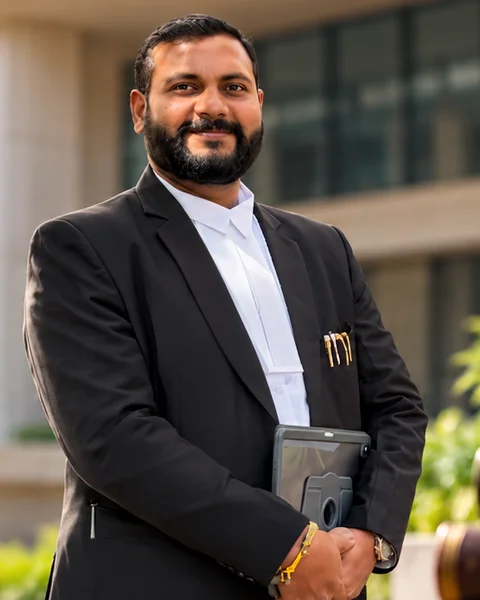
Advocate B.K. Singh
Founder of B.K. Singh & Associates. MCA, LL.B., LL.M. More than twenty years in practice before the Supreme Court, the Delhi High Court, district and commercial courts in Delhi NCR, and tribunals.
This guide explains the law in general terms and is not legal advice. For advice on your own papers, contact the team.